
Plant Care Guide
A Simple Watering Routine for Busy Plant Owners
Build a flexible watering routine with a repeatable baseline, weekly checks, rain pauses, seasonal adjustments, and travel preparation.
In this guide
Quick answer
A useful watering routine is a repeatable starting plan plus a short observation check—not a timer that runs unchanged forever. Group plants that can share a similar watering pattern, start conservatively, and review soil condition, recent rain, weather, drainage, and plant response before allowing the next cycle. Recheck the system each week and whenever the season, planting, or weather pattern changes. A timer can prevent missed watering, but you remain responsible for pausing, adjusting, and maintaining the setup.
Build a baseline before you automate
General irrigation guidance: scheduling means deciding when water is needed and how a system should respond. The U.S. Environmental Protection Agency advises against treating a clock schedule as a permanent setting because landscapes and weather change. University of Minnesota Extension similarly describes irrigation scheduling as a plan informed by soil, recent rainfall, weather, and observation rather than by the calendar alone.
Before programming a timer, run the watering line manually while you can watch it. Confirm that water reaches the intended root area, does not spray a walkway, and does not pool around a blocked outlet. Check emitters and connections for leaks. Note how long the soil takes to accept water and whether excess drains away. This first observation becomes the baseline you will compare with later checks.
Keep the first schedule simple. Record the day, start time, duration, plants served, and conditions at the time. Then inspect the same area after watering and again before the next planned cycle. The goal is not to find a universal duration. It is to learn whether this particular setup supplies water evenly enough for this particular group of plants.
Group plants by how they use water
Group plants by compatible watering needs before connecting them to one valve. One valve applies one schedule to everything downstream, so the plants connected to that line should have reasonably compatible patterns. Do not place a drought-tolerant container and a moisture-demanding planting on the same fixed routine simply because they are physically close. Container size, potting mix, sun exposure, wind, plant size, and drainage can all change how quickly a root zone dries.
VODESON editorial recommendation: make a quick zone card before connecting the line:
- List what the line serves. Include pots, beds, and any newly planted material.
- Note meaningful differences. Mark containers that are smaller, exposed to stronger sun or wind, or filled with a much faster-draining mix.
- Separate obvious outliers. Hand-water an exception or move it to a different zone rather than forcing the whole group to follow it.
- Choose representative check points. Inspect at least one area that tends to dry first and one that tends to stay wetter.
If you use a soil meter as one of those checks, follow the comparison method in How to Read Soil Moisture Before Leaves Droop. A reading is evidence from one location, not permission to water every plant on the line.
Run a five-minute weekly check
A brief inspection is more useful than repeatedly changing the program from memory. Choose a regular day and write down only what would affect the next cycle.
- Read the controller. Confirm the clock, programmed start, duration, and pause status still match your plan.
- Walk the line. Look for loose fittings, crushed tubing, clogged outlets, leaks, and water landing outside the intended area.
- Check the root zone. Use soil feel, pot weight where practical, drainage, and a consistent meter check if available. Inspect more than the surface.
- Compare plants within the group. Note whether one pot stays wet while another repeatedly dries first. That pattern may call for a zone change, not simply a longer run.
- Make one documented adjustment. If evidence supports a change, alter one setting and observe the result before changing several variables at once.
Also check after maintenance, a moved container, a repot, a new emitter, or a supply interruption. A timer can execute exactly what it was programmed to do even when the physical system no longer delivers water as expected.
Adjust after rain, heat, and seasonal change
A routine that worked last month may not fit this week. Recent rain can reduce the need for scheduled watering. Hot, dry, or windy conditions can increase water loss. Cooler weather, shorter days, shade from new foliage, and slower plant growth can reduce demand. EPA WaterSense guidance recommends adjusting clock-based irrigation as conditions and seasons change.
Use the forecast as a prompt to inspect, not as proof of what reached every root zone. A storm may soak an open bed but miss containers beneath an overhang. A brief shower may wet only the surface. Conversely, automatic watering after meaningful rain can leave a slower-draining pot wet for longer than intended.
When conditions change, review the representative check points from your zone card. Pause or revise the upcoming cycle when the recent pattern and root-zone checks agree. If only one plant is different, correct that plant’s placement, outlet, or zone rather than changing the program for all of them.
What a timer can—and cannot—do
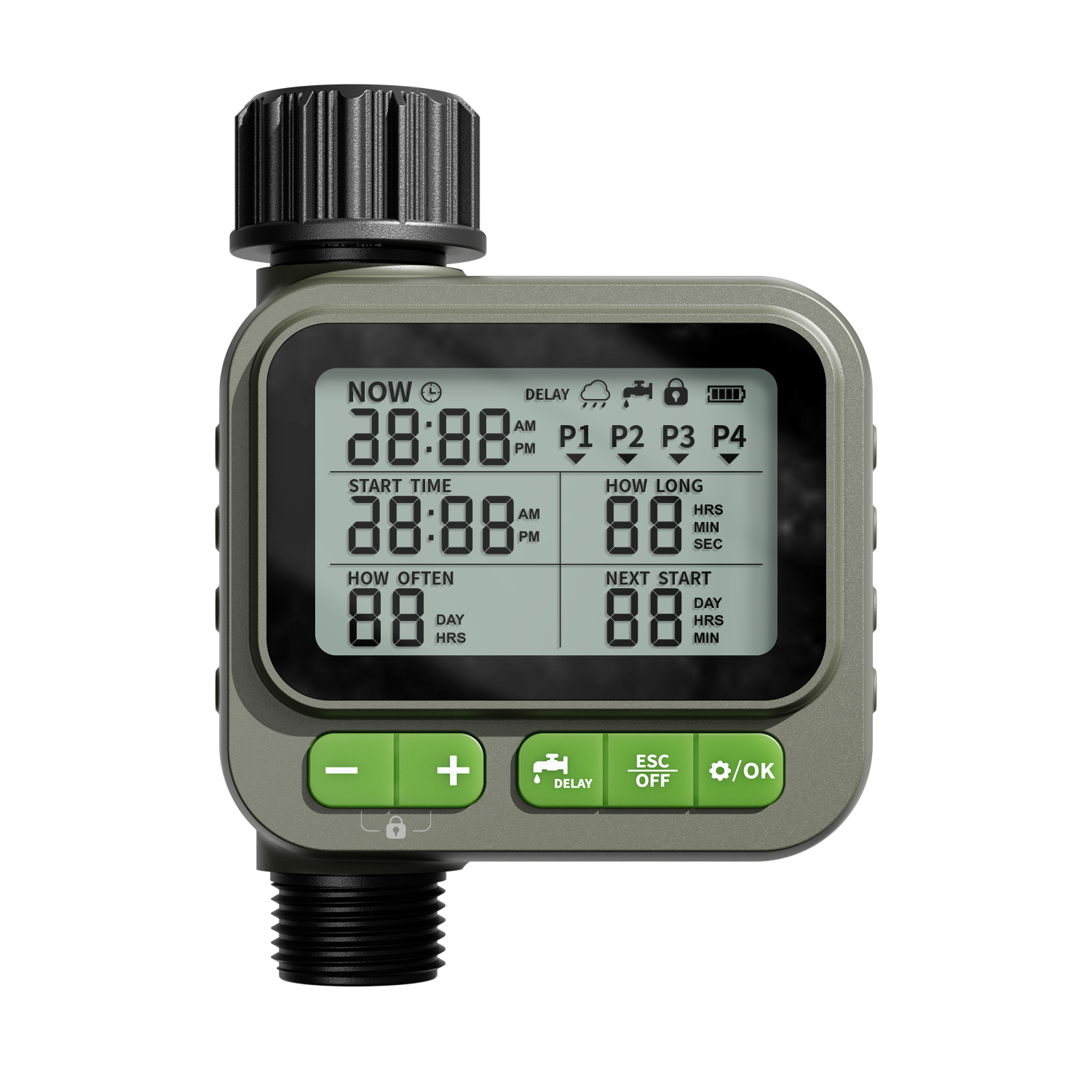
VODESON tool note: the VODESON Watering Timer – Single Valve available from VODESON is a clock-controlled outdoor timer for one watering line. It supports repeatable schedules, manual watering, and temporary rain pauses. It does not observe the soil or decide whether the next cycle is appropriate.
The timer is most useful after you have already created a reasonable baseline. It can reduce forgotten cycles and make the routine easier to repeat. It cannot detect a clogged outlet, a disconnected hose, a plant moved out of the group, or a root zone that remains wet. The weekly inspection and condition-based pause are therefore part of the routine, not optional extras.
Before you travel
Do not wait until departure day to automate an untested setup. Run the intended schedule early enough to observe at least one complete cycle and the following dry-down. Check batteries, fittings, water supply, program settings, and every outlet. Correct leaks and clogs before increasing duration.
Place containers where the watering line can reach them without creating a new light or heat problem. If moving a plant is unavoidable, compare the new light conditions first; the method in Where to Place Indoor Plants for Better Light explains why a nearby location can still behave differently.
Leave a simple written note for anyone who may check the property: what the system serves, how to stop the water, what normal drainage looks like, and whom to contact if there is a leak. Automation should make a proven routine easier to repeat, not hide a system no one understands.
When you return
Inspect before assuming the schedule worked. Check the controller history or current settings, then walk the entire line. Look for dry outlets, standing water, shifted containers, damaged tubing, and unusual plant changes. Compare the representative root zones with your pre-travel notes.
A stressed plant does not automatically mean the program needs more water. Wilting, yellowing, and leaf loss can have several causes, and a consistently wet root zone can also accompany decline. Verify delivery and soil condition before extending the next cycle. If one location differs, solve that local problem first.
Finally, return the timer to the current season’s routine rather than leaving a temporary travel program in place. Record anything that changed. That small log turns each trip, weather shift, or maintenance issue into better evidence for the next adjustment.
Sources and method
This guide separates general irrigation guidance, VODESON editorial workflow, and VODESON product references. It does not provide a universal watering frequency or duration because plants, containers, soil, exposure, and delivery systems differ.
- Seasonal adjustment and system observation: U.S. EPA WaterSense, “Home Maintenance” — seasonal clock adjustment, irrigation inspection, leaks, clogs, and soil differences.
- Why fixed schedules need review: U.S. EPA WaterSense, “Weather-Based Irrigation Controllers” — limits of clock schedules and the role of current conditions. This guide does not claim that the featured timer is a weather-aware controller.
- Scheduling inputs: University of Minnesota Extension, “Irrigation Scheduling: Checkbook Method” — transferable planning principles involving soil, rain, weather, and field observation; crop-specific calculations were not applied to home containers.
- Product reference: VODESON Watering Timer – Single Valve — product identity and currently published operating features only.
Sources were reviewed on August 27, 2026.