
About VODESON
Plant care begins with a better question.
Before watering, moving, or adjusting anything, it helps to know what changed. VODESON makes important conditions easier to notice so care can begin with evidence—not urgency.

A practical method
One signal is useful. A pattern is better.
Our tools are designed to support a simple sequence that keeps the decision with the person caring for the plant.
-
01
Notice the condition
Take a reading, look at the plant, and note what is happening now.
-
02
Compare it with context
Consider the pot, soil mix, plant type, location, weather, and recent care.
-
03
Make one considered change
Adjust one part of the routine, then observe what happens before changing more.
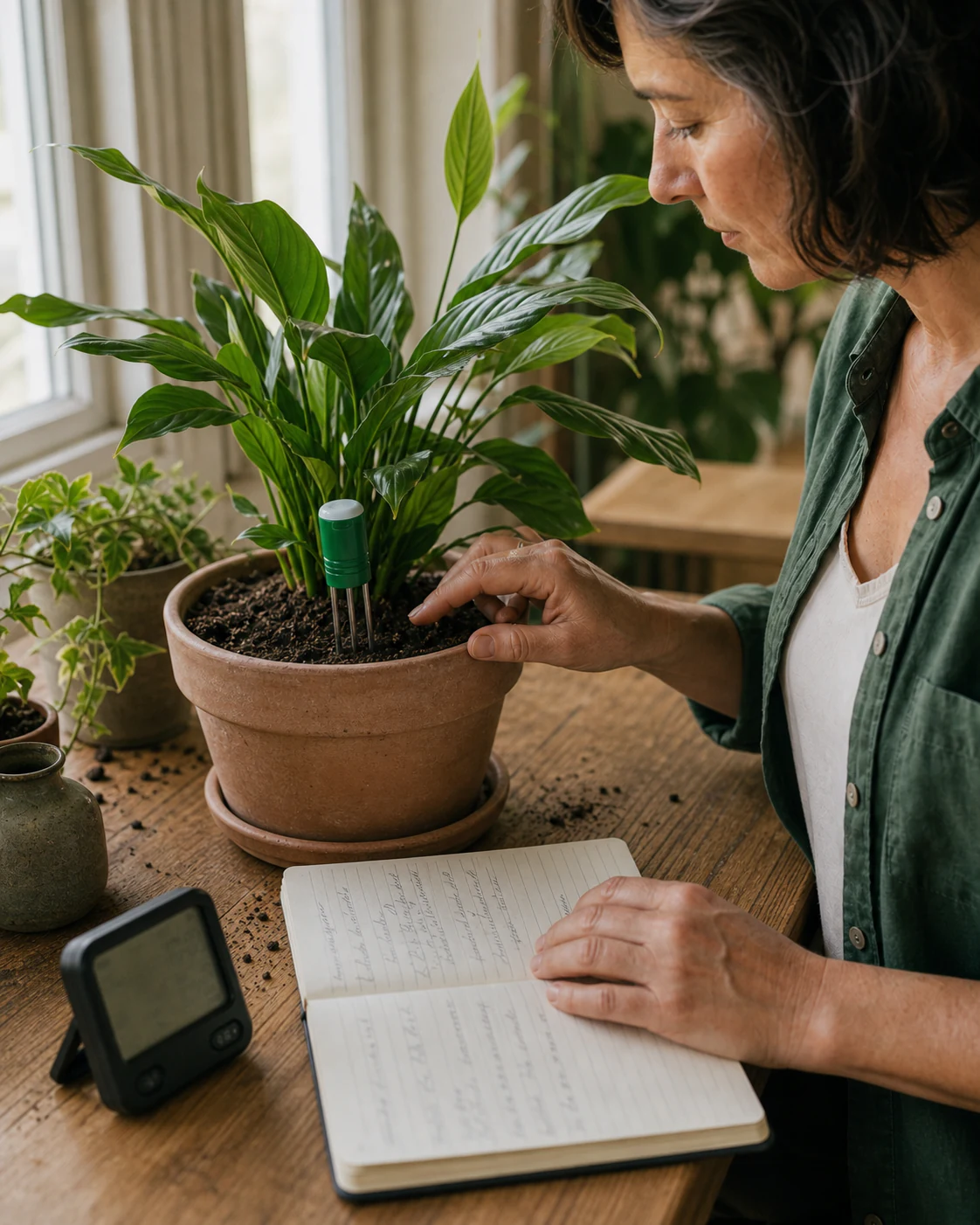
Why VODESON exists
Most uncertainty appears before the action.
Many plant-care mistakes are not caused by neglect. They happen because conditions are difficult to see, several pots are treated as if they were identical, or too many changes are made at once.
VODESON is built around the questions that appear in that moment—before the watering can, before a new location, and before a routine becomes a habit.
Does this pot need water today?
A reading gives you another signal to compare with soil feel, plant type, pot size, and recent conditions.
Are these pots responding the same way?
Plants in the same room can dry at different speeds. Comparing them helps prevent a one-schedule-fits-all routine.
Did the growing conditions actually change?
Repeat observations help separate a real environmental shift from a passing impression before you change the plant’s setup.
Designed for real routines
The goal is not more data. It is a steadier next step.
Plant care rarely happens in a perfect schedule. The useful tool is the one that helps you resume the routine, compare what is different, and protect what matters without creating more work.
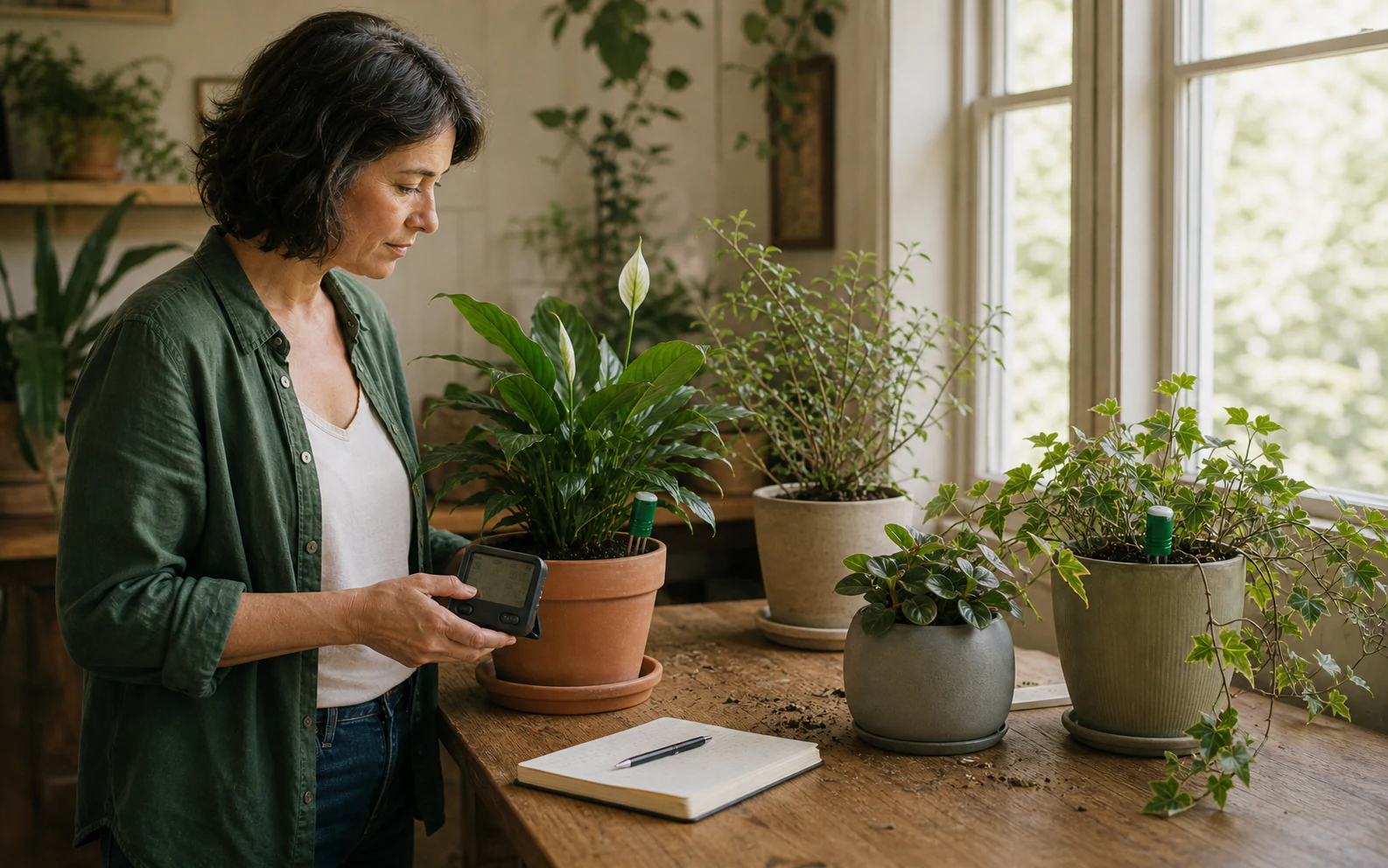
Several pots, different needs
Compare the pots that dry quickly with the ones that hold moisture longer.
A routine interrupted
Return to an observable checkpoint when travel, work, or life breaks the schedule.
A plant worth protecting
Gather more context before making a large change to a plant you value.
Useful boundaries
Clear signals. Honest limits.
A measurement adds context. It does not replace the plant, the room, or the person paying attention.
What the tools can tell you
- The condition at the moment you check.
- Differences between pots, locations, or repeated readings.
- Whether an adjustment is followed by a measurable change.
What still needs your judgment
- The plant’s species, history, symptoms, and tolerance.
- The pot, drainage, soil mix, season, and local weather.
- Whether to water, move, wait, or investigate further.
Continue from here
Start with the next question.
Explore the tools built to make everyday conditions easier to observe, or continue with the care guides for practical context.